Presidency deploys delegation to investigate Port of Durban issues – SAAFF

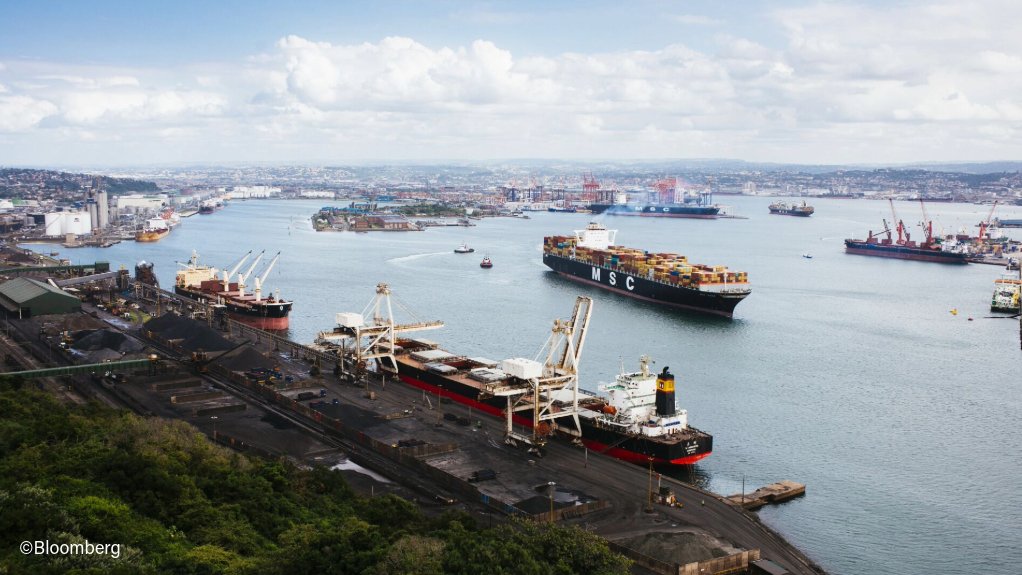


Member organisation the Southern African Association of Freight Forwarders (SAAFF) has escalated the “operational crisis” at the Durban Gateway Terminal (DGT) to the Presidency, with the organisation highlighting the “failure of the International Container Terminal Services (ICTSI) NAVIS container management system”, which it says has continued to impact operations and hinder the flow of cargo.
The DGT is a container terminal in the Port of Durban and is operated by ICTSI under a 25-year partnership with Transnet.
Following sustained engagement across the relevant port and State operator Transnet management structures, the SAAFF made direct representations to the Presidency on behalf of industry, outlining the severity of the situation and calling for urgent intervention.
“The disruption is having rapidly escalating knock-on effects across the national supply chain, affecting freight forwarders, cargo owners, producers, transporters and other service providers,” the organisation warns.
The SAAFF confirms that a delegation from the Presidency is en route to the port, as of August 21, to engage directly with the situation and assist with mobilising solutions.
It says the delegation has been fully briefed by the SAAFF on the operational realities and the consequences for industry and the wider economy.
In a separate statement, the SAAFF explains that the impasse at the DGT, which emerged following the transition to DGT’s independent NAVIS N4 system, has been compounded by wider operational, equipment, yard and coordination constraints and “has severely constrained operations and choked the flow of cargo”.
SAAFF Analytics and Industry Intelligence head of research Dr Jacob van Rensburg tells Engineering News the current disruption at DGT is broader than a single IT system problem.
“The transition to DGT’s independent NAVIS N4 platform has coincided with wider operational constraints involving booking availability, yard and stack fluidity, equipment reliability, landside evacuation and coordination across the terminal interface.
The SAAFF’s concern is therefore with the performance of the logistics system rather than any one isolated activity,” he explains.
Van Rensburg says that, as a result, containers have not been evacuated from the terminal at the required rate (stack occupancy is nearing 85%, meaning that fluidity in the terminal is severely constrained), contributing to congestion and knock-on delays across vessel, road, rail and back-of-port operations.
He also warns of the commercial consequences. “Where containers cannot be moved because of constraints outside the control of cargo owners, freight forwarders or transporters, the SAAFF’s position is that the associated storage, demurrage, and delay costs should not simply be transferred downstream to those parties.”
The SAAFF’s immediate priority is the restoration of system fluidity across the terminal and its connected logistics chain.
It notes that this requires coordinated intervention across waterside, yard, landside, rail and back-of-port operations rather than optimisation of individual activities in isolation.
“The SAAFF has made it clear that industry must be directly represented in the intervention and recovery process; container flows must be restored urgently; and costs arising from system failures and delays beyond industry’s control cannot be transferred to cargo owners, freight forwarders or other affected parties,” the organisation stresses.
The SAAFF has also tabled practical recovery measures focused on restoring booking capacity and container evacuation, restoring stack fluidity and accuracy, increasing equipment availability, using available capacity elsewhere in the port system where practicable, strengthening rail integration and addressing storage and demurrage exposure arising from circumstances beyond cargo owners’ control.
The organisation has further called for clear, verified and regular operational communication, including appropriate headline operational performance indicators that allow the wider supply chain to plan against actual terminal conditions.
The SAAFF also points out that the situation underscores the need for permanent structures capable of identifying risks, coordinating preventive planning and intervening before operational failures develop into national supply-chain emergencies.
It is therefore calling for the establishment of RESOLVE Activism Structures within its OpsCo programme.
These industry-led action nodes would connect SAAFF members, private-sector participation operators, cargo owners and relevant public-sector authorities through a framework for early warning, coordinated operational intervention, defined escalation and accountable execution, the organisation suggests.
The SAAFF says it will continue to engage the relevant authorities.
Van Rensburg stresses that private operation does not make DGT an isolated logistics asset, with this remaining embedded within the Port of Durban and the wider national freight system, and operational interfaces involving Transnet, rail, adjoining terminals, shipping lines, transporters and back-of-port facilities.
Accordingly, the SAAFF does not view the appropriate response as one in which government or Transnet attempts to assume the private operator’s day-to-day terminal-management responsibilities, he avers.
The role is instead to ensure that the system-wide interfaces are functioning and that all relevant parties are coordinated around recovery, Van Rensburg posits.
In this vein, the SAAFF has engaged across the terminal, port and Transnet management structures and escalated the issue when the consequences began extending beyond DGT itself, he points out.
Van Rensburg explains that the Presidency’s involvement should similarly be understood as facilitating an urgent, coordinated response to a disruption with national supply-chain and economic consequences, rather than intervening in the commercial management of a privately operated terminal.
“For Transnet Port Terminals and Transnet, there are also practical system-level questions: whether available capacity elsewhere in the Durban port system can assist during recovery, how rail evacuation can be strengthened, and how the different public and private components of the port system can collectively restore cargo fluidity. The objective is not to protect individual institutional boundaries; it is to restore the functioning of the integrated freight system,” he notes.
The SAAFF has also engaged directly with DGT management as part of its sustained intervention, in addition to its engagements with Transnet and the wider port structures.
The organisation says DGT advised that operations resumed after the NAVIS N4 migration but that the terminal was initially operating at about 70% of standard operating norms, with appointment slots being released in a controlled manner while the new system stabilised.
DGT also introduced a 24/7 Hypercare support structure, prioritised certain urgent movements and reefers and undertook to provide additional information to assist transporters with container collection.
While the SAAFF acknowledges those recovery measures, its position remains that the test of recovery is not simply whether the NAVIS system is technically operational, but whether cargo is flowing through the full terminal system at sustainable levels.
Engineering News has reached out to DGT for comment.
Article Enquiry
Email Article
Save Article
Feedback
To advertise email advertising@creamermedia.co.za or click here

Projects

Latest Multimedia
Latest News
Showroom

Iritron delivers advanced automation, control, and optimisation solutions to the Mining, Minerals & Metals, Consumer Package Goods and...
VISIT SHOWROOM

Announcements
What's On
Subscribe to improve your user experience...
Option 1 (equivalent of R125 a month):
Receive a weekly copy of Creamer Media's Engineering News & Mining Weekly magazine
(print copy for those in South Africa and e-magazine for those outside of South Africa)
Receive daily email newsletters
Access to full search results
Access archive of magazine back copies
Access to Projects in Progress
Access to ONE Research Report of your choice in PDF format
Option 2 (equivalent of R375 a month):
All benefits from Option 1
PLUS
Access to Creamer Media's Research Channel Africa for ALL Research Reports, in PDF format, on various industrial and mining sectors
including Electricity; Water; Energy Transition; Hydrogen; Roads, Rail and Ports; Coal; Gold; Platinum; Battery Metals; etc.
Already a subscriber?
Forgotten your password?
Receive weekly copy of Creamer Media's Engineering News & Mining Weekly magazine (print copy for those in South Africa and e-magazine for those outside of South Africa)
➕
Recieve daily email newsletters
➕
Access to full search results
➕
Access archive of magazine back copies
➕
Access to Projects in Progress
➕
Access to ONE Research Report of your choice in PDF format
RESEARCH CHANNEL AFRICA
R4500 (equivalent of R375 a month)
SUBSCRIBEAll benefits from Option 1
➕
Access to Creamer Media's Research Channel Africa for ALL Research Reports on various industrial and mining sectors, in PDF format, including on:
Electricity
➕
Water
➕
Energy Transition
➕
Hydrogen
➕
Roads, Rail and Ports
➕
Coal
➕
Gold
➕
Platinum
➕
Battery Metals
➕
etc.
Receive all benefits from Option 1 or Option 2 delivered to numerous people at your company
➕
Multiple User names and Passwords for simultaneous log-ins
➕
Intranet integration access to all in your organisation